 Hardware Wallets
Hardware Wallet Setup Checklist: From Unboxing to First Test Transaction
Follow a careful setup sequence for a new hardware wallet, including authenticity checks, backup, verification, and a small test transfer.
Learn how wallets, keys, backups, hardware devices, approvals, and scams work—without connecting a wallet or sharing a recovery phrase.
Move from first principles to stronger storage, recovery, privacy, and scam-defense routines.
Addresses, keys, networks, fees, and what a wallet really does.
Explore guide →Build layers around devices, backups, signing, and incident response.
Explore guide →Understand direct key control, recovery duties, and practical trade-offs.
Explore guide →Set up dedicated signing devices and verify actions on the trusted display.
Explore guide →Spot fake support, malicious approvals, impersonation, and urgent payment traps.
Explore guide →Read ten in-depth guides built around practical wallet decisions.
Explore guide →A simple review process can catch wrong networks, changed addresses, dangerous permissions, and impersonation.
Decide whether the wallet is transferring, approving, connecting, restoring, or merely signing a message.
Return through a known official path instead of trusting an ad, direct message, or unexpected pop-up.
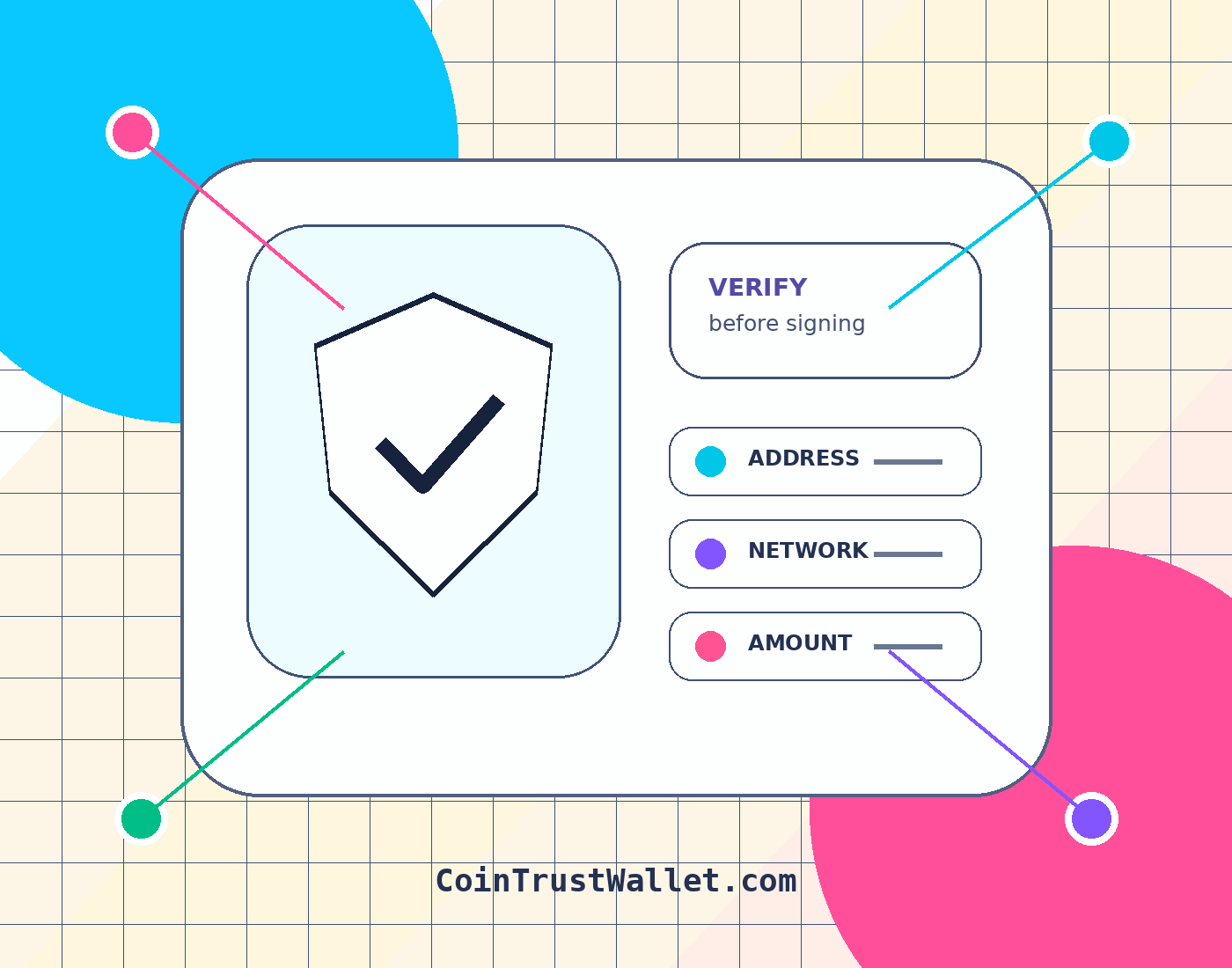
Compare the network, full destination, amount, fee, contract, and permission on the trusted display.
Use low value first, then record the wallet role and recovery process before increasing exposure.
Practical explanations for the decisions most likely to affect access and security.
Hardware Wallets
Follow a careful setup sequence for a new hardware wallet, including authenticity checks, backup, verification, and a small test transfer.
 Self-Custody
Understand who controls the keys, what each model asks of you, and how to choose an arrangement that fits your needs and habits.
 Self-Custody
Build a documented recovery process that covers backups, device loss, trusted helpers, inheritance considerations, and regular drills.
 Wallet Privacy
See what a public ledger can reveal, why address reuse matters, and which everyday habits can reduce unnecessary exposure.
 Scam Defense
Recognize common pressure tactics, fake support messages, malicious approvals, and other warning signs before money moves.
 Multisig
Learn how threshold signing distributes authority, which problems multisig can solve, and what operational complexity it adds.
Hardware, software, and account controls can reduce specific risks. They still depend on authentic downloads, protected backups, and careful transaction review.
CoinTrustWallet.com publishes educational material only. It does not custody assets, facilitate trades, provide personalized financial advice, or represent Trust Wallet.
Wallet security becomes easier when every credential has a clear role and every transaction follows a consistent verification routine.